
Tag Archives: how to write

The Dark Side of Romance: Abusive Relationships in Fiction

Don’t get me wrong, I’m a sucker for a dark brooding romantic interest. (Team Edward forever.) But I’m also a survivor of multiple abusive relationships, some of them legitimately dangerous. As a romance writer, I’d like to look at the problems with these fictional relationships, and how we can address them in future stories.

Here are the three main issues with dark romance:

  1. They’re just… misunderstood? Okay, I fall for this one myself, but it’s a serious problem. Oftentimes, the romantic interest in these cases has some traumatic backstory, and this is used as the reason they act so toxic. Yes, a traumatic backstory and conflicting or complex emotions can add to the depth of a character, but if at any point you wonder if this person is capable of actually hurting you… that’s not depth. That’s a red flag. Unfortunately, when we see enough of these fictional relationships, we can ignore red flags in the real world because we have been conditioned to think that our partner is just complex and misunderstood, when really they are just plain abusive.
  2. They’re doing it because they love me. Controlling behavior in fiction is often seen as a sign that they are protective and they just go about it the wrong way. Like the obsession with knowing where the main character is at all times and even breaking their car or following them when they go out is just a way to keep them safe. Good intentions don’t make stalking and control okay, and if we see enough of this in fiction, it’s easier to dismiss it in real life as just a sign that they are just overprotective. In reality, these behaviors lead to dependence on them and the need to look over your shoulder at all times.
  3. But I can save them! No, you can’t. And you shouldn’t have to. Of course we should be there for someone we love, even if they are going through some emotional upheaval or processing trauma. But their trauma shouldn’t give you trauma of your own. Too often in fiction, the main character makes extreme personal sacrifices to make the love interest comfortable. In the end, the love interest heals their trauma and it all ends up being worth it. But that’s a fictional story. In the real world, making all these sacrifices will often lead to you giving up more and more of yourself to make the relationship work, and your partner probably won’t work on any of their trauma either. The relationship might end up working, but it won’t be because you saved them. It’ll be because you sacrificed yourself for the relationship.

As writers, we can change these toxic narratives.

We can still have some of the dark traits in the love interest, but we have to include accountability, working on themselves, and the main character should set and enforce boundaries that need to be met for the relationship to continue.

I know, this doesn’t sound as sexy and fun as the usual dark romance relationships where sometimes the danger can be the spark of it, but fiction is a powerful medium, and we should try to be more careful what we write and the repercussions it might have for our readers.
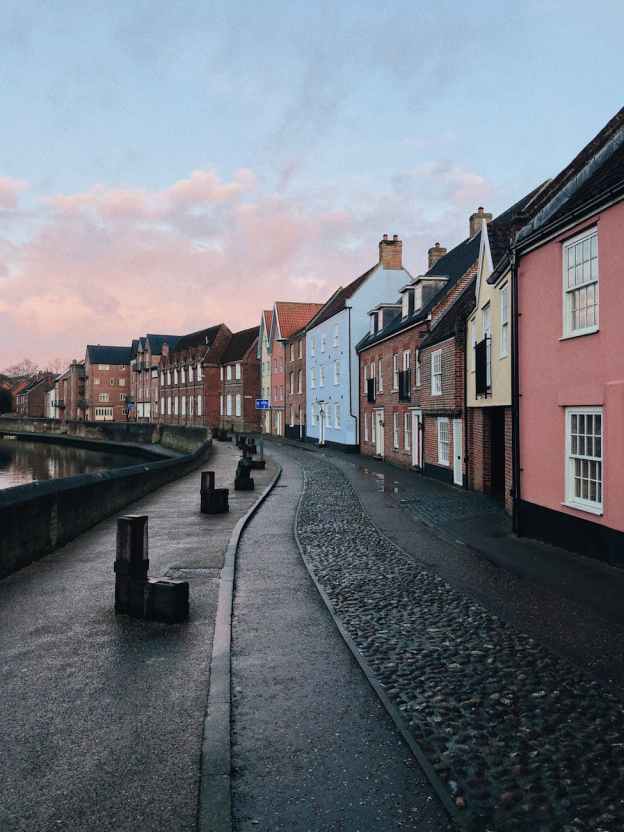
What Makes Fictional Settings Feel So Real? Examples from Popular Fiction

I love books where the setting is central to the plot.

In fact, I would say that in these cases, the setting itself is a character in the story.

In this post I’d like to share with you three things that make these setting so memorable. (And, if you are a writer, how you can write settings that will really have an impact on your readers.) I’m also going to share some examples from Popular stories to give you an idea of what this looks like in action.

A setting plays a deeper role in a story when it:

  1. Uses all the senses. When we walk around the world we aren’t just seeing the places we go, we are experiencing them will all of our senses. Instead of just describing the way a setting looks, be sure to add the way it feels, sounds, and smells to help your reader feel immersed in the setting as they read.
  2. The characteristics of the setting allow it to affect the plot and the other characters in the story. If a character is dealing with feelings of seclusion, loneliness, or self-reliance, then setting your story on an island or a cabin up in the mountains would be a great way to reflect these inner struggles. Having a setting that reflects the inner world of your characters or that physically affects their choices or conflicts can really make the setting stand out.
  3. The little details matter. Every story has a setting, but the little details about the settings are what make it real. It’s one thing to say a character is standing in a garden. It’s another to say that they are standing in an overgrown garden with a chipped white fence where the gate creeks loudly and the weeds snag at their skirt as they walk down the rocky path to the dirt road. The details give the setting its personality.

Below I’ve provided some vivid examples from literature where the setting has a lot to do with the overall story and the charter’s experiences.

  • Love in a Fallen City by Eileen Chang – The first novella in this collection starts with beautiful descriptions of the house and garden, but it intentionally reflects the blend between Eastern and Western aesthetics. This sets the deeper themes of the story by reflecting the characters’ struggles in navigating a social class system that blends Chinese and English cultural expressions.
  • Neverwhere by Neil Gaiman – The setting in this story is really the central focus, while the characters are merely moving through this world at the mercy of what the setting has in store for them. Neverwhere is unique in that the setting is both fantastical and modern at the same time. The story takes place in London, but not just the way we experience it today, and instead in a parallel universe of sorts where fantasy becomes reality. Gaiman’s more popular story, Coraline, uses those sensory descriptions I mentioned earlier, and even though the book is short, the setting really makes the story extra creepy.
  • The Writer’s Retreat by Julia Bartz – This story, like many other thrillers, utilizes a house in a secluded area as the backdrop of the terrifying drama that unfolds. Similar stories include The Hunting Party by Lucy Foley, and We Used to Live Here by Marcus Kliewer. These stories, and the circumstances faced by their characters, would not be possible if they were set anywhere else. That’s the power of a well-chosen setting.
  • Harry Potter by J.K. Rowling – The magical world and Hogwarts Castle are half of what makes this series so captivating. Just take a look Universal’s “Harry Potter Land” in Orlando. It really is the setting of a hidden magical world within our modern world (much like Neverwhere) that makes these stories feel so real for us. And more than that, this setting was well-crafted down to the details awhile also containing expansive world building.

Settings really do have the power to take us to a whole new world, and to feel the emotional depth of a story as we walk side-by-side with the characters, wherever they go.

*Author’s Note: In my blog I might reference stories or authors that are considered controversial. However, throughout my studies I have taken the stance that removing the artist from their art is sometimes necessary in order to see the beauty of the fantasy behind the grim reality. After all, that’s what stories are for. They give us hope when the world lets us down. Unfortunately, sometimes that person that lets us down was the one holding the pen.