Tag Archives: inspiration

The Dark Side of Romance: Abusive Relationships in Fiction

Don’t get me wrong, I’m a sucker for a dark brooding romantic interest. (Team Edward forever.) But I’m also a survivor of multiple abusive relationships, some of them legitimately dangerous. As a romance writer, I’d like to look at the problems with these fictional relationships, and how we can address them in future stories.

Here are the three main issues with dark romance:

  1. They’re just… misunderstood? Okay, I fall for this one myself, but it’s a serious problem. Oftentimes, the romantic interest in these cases has some traumatic backstory, and this is used as the reason they act so toxic. Yes, a traumatic backstory and conflicting or complex emotions can add to the depth of a character, but if at any point you wonder if this person is capable of actually hurting you… that’s not depth. That’s a red flag. Unfortunately, when we see enough of these fictional relationships, we can ignore red flags in the real world because we have been conditioned to think that our partner is just complex and misunderstood, when really they are just plain abusive.
  2. They’re doing it because they love me. Controlling behavior in fiction is often seen as a sign that they are protective and they just go about it the wrong way. Like the obsession with knowing where the main character is at all times and even breaking their car or following them when they go out is just a way to keep them safe. Good intentions don’t make stalking and control okay, and if we see enough of this in fiction, it’s easier to dismiss it in real life as just a sign that they are just overprotective. In reality, these behaviors lead to dependence on them and the need to look over your shoulder at all times.
  3. But I can save them! No, you can’t. And you shouldn’t have to. Of course we should be there for someone we love, even if they are going through some emotional upheaval or processing trauma. But their trauma shouldn’t give you trauma of your own. Too often in fiction, the main character makes extreme personal sacrifices to make the love interest comfortable. In the end, the love interest heals their trauma and it all ends up being worth it. But that’s a fictional story. In the real world, making all these sacrifices will often lead to you giving up more and more of yourself to make the relationship work, and your partner probably won’t work on any of their trauma either. The relationship might end up working, but it won’t be because you saved them. It’ll be because you sacrificed yourself for the relationship.

As writers, we can change these toxic narratives.

We can still have some of the dark traits in the love interest, but we have to include accountability, working on themselves, and the main character should set and enforce boundaries that need to be met for the relationship to continue.

I know, this doesn’t sound as sexy and fun as the usual dark romance relationships where sometimes the danger can be the spark of it, but fiction is a powerful medium, and we should try to be more careful what we write and the repercussions it might have for our readers.


My Greatest Fear (As an Author)

I have mixed anxiety and depression, so almost anything can make me anxious. However, there is one thing that cripples my mind and my writing more than anything else.

I only recently started working on this fear, and so far it’s been going well. I’ve been writing and posting more, and I’ve felt more creative and more like myself lately. But even so, this fear still sits heavily on my chest.

So what am I so afraid of?

It’s NOT bad book reviews, or rejection letters from agents.

I have a fear of success.

It comes at me from both sides: part of myself believes I shouldn’t bother trying because I will fail anyway, and the other part of myself believes that even if I did succeed it wouldn’t last long, or I wouldn’t be able to handle the big change in my life that success might cause (like quitting my day job and becoming a full-time writer).

So, I sabotage my own career.

I stop myself from writing, I delete posts and stories that I write, and I trash email submissions of my work.

Is it because I haven’t been successful before?

No.

During the free giveaway weeks for two of my novels, they both were downloaded between 2 to 4 thousand times and reader number one in their categories on Amazon.

I’ve had short stories published through my university, online journals, and one that will be published in an anthology in the UK sometime in the next year.

But, I’ve also had some traumatic publishing experiences, including my family’s attempt to silence my writing career when I published my first debut novel. I was so excited to share my stories, but now I have to write in secret and stay silent around those closest to me when it comes to my stories.

How have I been working on my fear?

By writing something small every day. I set out a schedule for myself that consists of small posts or writing only a page or so a day. The more I check off that list, the more confident I become.

Seeing that nothing bad happens, and celebrating small wins has boosted my confidence and my creativity.

If you suffer from the same fear as me, I highly recommend setting up a simple checklist so you can grow your career one step at a time.

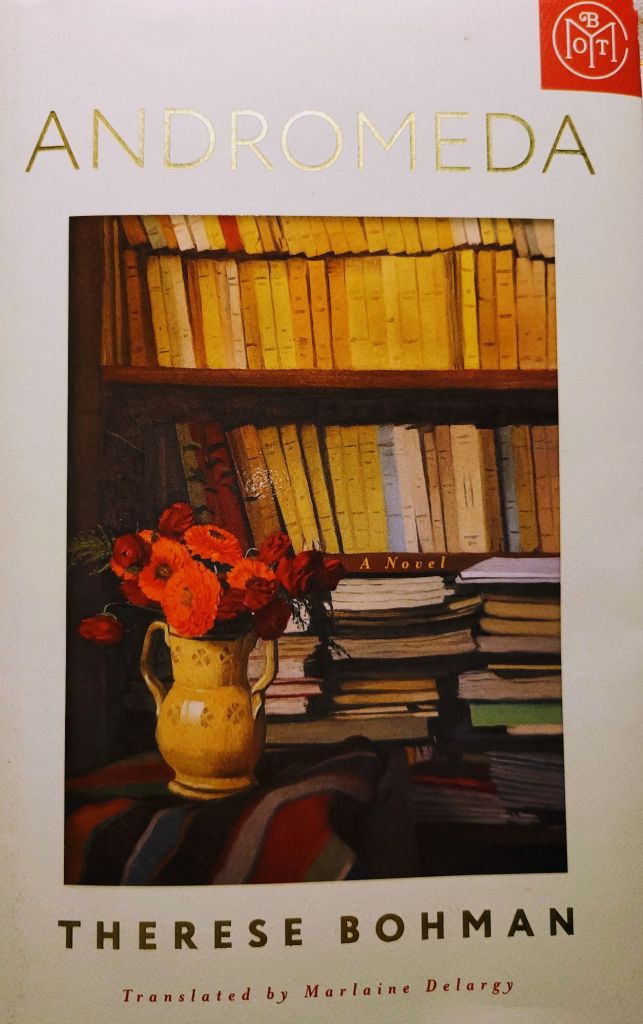
Review: Andromeda by Therese Bohman

I just finished a book that was so painfully relatable and so well-written that it took me two months to read.

I had to take it one page at a time, stopping and pondering on what it had said as if it were a book of poetry.

Each paragraph was written in flowing prose, usually on a mundane topic, but the final sentence for each paragraph was a sharp statement that carried weight and truth, even if it was only a couple of words.

This book held my heart and my senses. It read almost like a diary or as if you had found old letters that were too personal to read. Like you were peaking into the life of a person that was both relatable to yourself while simultaneously heartbreaking to relate to.

The themes discussed in the book were the old versus the new, tradition versus modernity, age versus maturity, art and literature versus life, and most of all the complicated emotions and relationships we find ourselves in.

The book is ANDROMEDA by Therese Bohman.

This book is NOT for everyone.

It tells the story from the perspective of two characters. One is a young woman who interns at a publishing house, and the other is an older man who is the editor of the publishing house.

I know what you are thinking, but hold on….

This isn’t one of those power dynamic relationships that leads to trouble. This isn’t about the ways in which men are controlling or women are victims. In fact, this technically can’t be considered a romance at all. Nothing happens.

This book is about relationships, yes. But it is more about how we want to be seen, how we see others, and how the little things in life all add up to equal our experiences. How life happens in the in-between spaces.

As someone who has had similar situations to the one in the book, I found it beautiful and heartbreaking. The topic was personal, but more than that, the execution was flawless.

It was aesthetic and poetic, and perfect. I almost cried when it was over. It was simultaneously about everything and nothing, and I highly recommend you read it if it sounds at all interesting to you.

5 Easy Steps to Character Creation

So, you have a character in mind but you can’t quite put them together? Or maybe you only have a story idea. Or, even more stressful…maybe your story is just to short or empty and you have to create more character to fill the space!

Have no fear! Here are 5 easy steps to create new characters:

1. Name

This, for me, is the hardest part. I am terrible at naming characters. But I’ve found some amazing resources that have helped me. The first is to find an app for your phone that generates names. It’s free and you can get a name in just one click. Second, you can try baby name books. These are great, and you can check off names you have already used so you never repeat names. And last, you can become a “name collector.” This means that when you meet new people in public, or online, if they have a name you like, you write it down. You create a notebook of names to come back to later.

2. The Good Stuff

Now it is time to list why your character is so great (or not great if they are the antagonist). What are they good at? Why do others like them? Are they strong? Good at knitting? Smile all the time? Treat this section like someone asked, “Hey, your friend seems nice. Tell me about them.”

3. The Bad Stuff

Well, we can’t be good at everything. And neither can our characters! A flawed character is necessary to not only move the story along, but also to make them relatable to the reader. So, what about them gets in the way? Are they lazy or easily confused? Or so they have a physical disability or perhaps emotional scars from the past?

4. Backstory

Unless your main character is a newborn baby, then they had stuff happen to them before the opening of the story. Even if you never talk about these things directly, it is important to know them. The character’s past will be the reason they act the way they do in relation to others. And, it is how they got to where they are now. Act like their therapist. Ask them what their childhood was like, and what were they like in school? Things like that. And write them down for later.

5. Goals

Now that they are here, where are they going? Even small side characters have goals. Your characters are like people. They have hopes and dreams. They are trying to accomplish something. What is it? A new job? A new relationship?

But wait…even more that the goal…is the WHY? Anew relationship because they got a divorce? A new job because they dream of being rich? Or are they moving somewhere?

Once you get all these down you should not only have more rounded characters, but it will be easier to write them in relation to one another. They will interact with other characters and their surroundings more naturally.