I just finished a book that was so painfully relatable and so well-written that it took me two months to read.
I had to take it one page at a time, stopping and pondering on what it had said as if it were a book of poetry.
Each paragraph was written in flowing prose, usually on a mundane topic, but the final sentence for each paragraph was a sharp statement that carried weight and truth, even if it was only a couple of words.
This book held my heart and my senses. It read almost like a diary or as if you had found old letters that were too personal to read. Like you were peaking into the life of a person that was both relatable to yourself while simultaneously heartbreaking to relate to.
The themes discussed in the book were the old versus the new, tradition versus modernity, age versus maturity, art and literature versus life, and most of all the complicated emotions and relationships we find ourselves in.
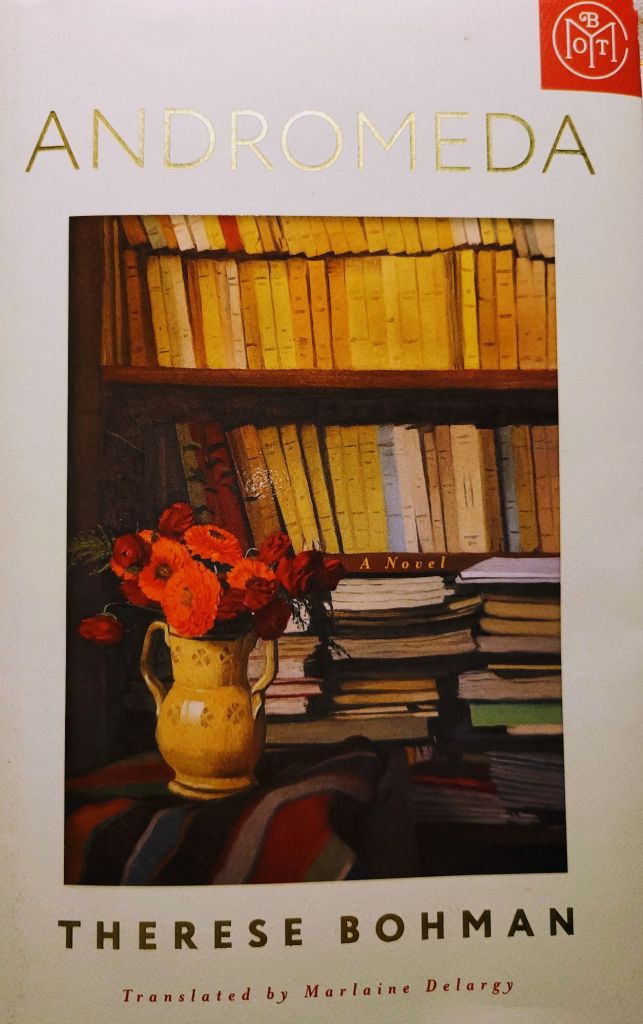
The book is ANDROMEDA by Therese Bohman.
This book is NOT for everyone.
It tells the story from the perspective of two characters. One is a young woman who interns at a publishing house, and the other is an older man who is the editor of the publishing house.
I know what you are thinking, but hold on….
This isn’t one of those power dynamic relationships that leads to trouble. This isn’t about the ways in which men are controlling or women are victims. In fact, this technically can’t be considered a romance at all. Nothing happens.
This book is about relationships, yes. But it is more about how we want to be seen, how we see others, and how the little things in life all add up to equal our experiences. How life happens in the in-between spaces.
As someone who has had similar situations to the one in the book, I found it beautiful and heartbreaking. The topic was personal, but more than that, the execution was flawless.
It was aesthetic and poetic, and perfect. I almost cried when it was over. It was simultaneously about everything and nothing, and I highly recommend you read it if it sounds at all interesting to you.
So, you have a character in mind but you can’t quite put them together? Or maybe you only have a story idea. Or, even more stressful…maybe your story is just to short or empty and you have to create more character to fill the space!
Have no fear! Here are 5 easy steps to create new characters:
1. Name
This, for me, is the hardest part. I am terrible at naming characters. But I’ve found some amazing resources that have helped me. The first is to find an app for your phone that generates names. It’s free and you can get a name in just one click. Second, you can try baby name books. These are great, and you can check off names you have already used so you never repeat names. And last, you can become a “name collector.” This means that when you meet new people in public, or online, if they have a name you like, you write it down. You create a notebook of names to come back to later.
2. The Good Stuff
Now it is time to list why your character is so great (or not great if they are the antagonist). What are they good at? Why do others like them? Are they strong? Good at knitting? Smile all the time? Treat this section like someone asked, “Hey, your friend seems nice. Tell me about them.”
3. The Bad Stuff
Well, we can’t be good at everything. And neither can our characters! A flawed character is necessary to not only move the story along, but also to make them relatable to the reader. So, what about them gets in the way? Are they lazy or easily confused? Or so they have a physical disability or perhaps emotional scars from the past?
4. Backstory
Unless your main character is a newborn baby, then they had stuff happen to them before the opening of the story. Even if you never talk about these things directly, it is important to know them. The character’s past will be the reason they act the way they do in relation to others. And, it is how they got to where they are now. Act like their therapist. Ask them what their childhood was like, and what were they like in school? Things like that. And write them down for later.
5. Goals
Now that they are here, where are they going? Even small side characters have goals. Your characters are like people. They have hopes and dreams. They are trying to accomplish something. What is it? A new job? A new relationship?
But wait…even more that the goal…is the WHY? Anew relationship because they got a divorce? A new job because they dream of being rich? Or are they moving somewhere?
Once you get all these down you should not only have more rounded characters, but it will be easier to write them in relation to one another. They will interact with other characters and their surroundings more naturally.



 Elizabeth Penn